Tuesday, 13 Oct 2026
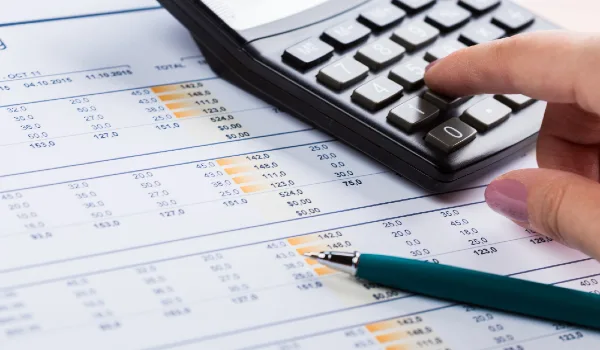
A balance sheet is a financial statement that shows the amounts of assets, liabilities, and shareholders’ equity as of a specific date. It is consistent with the basic accounting equation, which states that assets = liabilities + shareholders’ equity. This equation establishes the relationship between a business’s assets and liabilities.
Basically, total assets equal the sum of liabilities and equity. In other words, everything the business possesses has been financed through debt, shareholders’ investments, or profits. Unlike the income statement, which records the business’s income and expenditure over a certain period, the balance sheet reflects the organisation’s financial position at a specific point in time.
In this guide, you will learn what a balance sheet is in practical terms and why it can be important for you if you are seeking a bookkeeper in Melbourne.
Let’s dive in more!
A balance sheet has three major components to it:
Assets
Assets are a category of resources owned or controlled by the business. They may be used to generate revenue and facilitate the firm’s operations. It can be divided into two major categories:
Liabilities
Liabilities represent the financial obligations a business owner owes to others. These are some obligations that may arise from loans, credit purchases, unpaid expenses, or other business transactions. Liabilities also have two major categories:
Shareholder’s Equity
Shareholder’s equity is the residual value of a business’s assets after deducting its liabilities. It refers to the equity in a business that belongs to its owner.
The main components may include share capital, retained earnings, and other equity reserves, depending on the type of business and the applicable accounting standards.
Let’s just suppose a business has assets of $10 lakh and liabilities of $4 lakh, so its shareholders’ equity is $6 lakh. If shareholders’ equity is positive and growing, it may indicate that the business is creating value.
A balance sheet is not only a financial statement but also a useful tool for assessing the business’s efficiency in managing risks and making managerial decisions. If you seek bookkeepers in Melbourne, then these points can help you understand more:
A balance sheet gives an insight into a business’s financial position. By analysing liabilities and assets, an entrepreneur can determine whether they have sufficient resources to pay off debts.
A business with manageable liabilities and good liquidity will be better able to handle unexpected expenses than one burdened with debt and cash-short.
Business owners often have to make choices about hiring employees, purchasing machinery, expanding their businesses, or entering new ventures. A balance sheet is instrumental in determining the amount of assets before incurring any major expenses.
Debt management is important to staying financially secure. A balance sheet gives a business an insight into how much money it owes and helps owners analyse available resources.
Balance sheets are normally analysed by investors and lenders before making any financial commitments. Investors want to see whether a business is positioned to benefit in the future or whether a lender can repay a loan.
Liquidity measures whether the business has enough funds to meet its short-term obligations, while solvency concerns the business’s capacity to pay long-term debts. Companies use the balance sheet to calculate several important ratios such as the current ratio and the ratio of liabilities to stockholders’ equity. These values allow for a more in-depth consideration of the business’s financial standing and weaknesses.
The balance sheet is a powerful tool for enterprises seeking to assess whether they are financially stable enough to set future goals. It will help determine whether the business relies too much on borrowed money, has too much stock, or lacks sufficient capital.
Thus, the manager will be able to develop a realistic budget, plan costs, allocate resources more effectively, and, if seeking bookkeepers in Melbourne, develop development strategies.
A balance sheet is an important financial document used by a business to show what it owns, what it owes, and how much its owners receive in value. It aids in strategic financial and solvency assessment. Small and large enterprises can identify potential financial risks and opportunities by regularly reviewing an accurate balance sheet before they become serious.
It offers a better understanding of the firm’s results when combined with the income statement and cash flow statement. In the end, a reliable balance sheet contributes to responsible decision-making, better financial management, and sustainable growth of any business at any time.


Liability limited by a Scheme approved under Professional Standards Legislation